
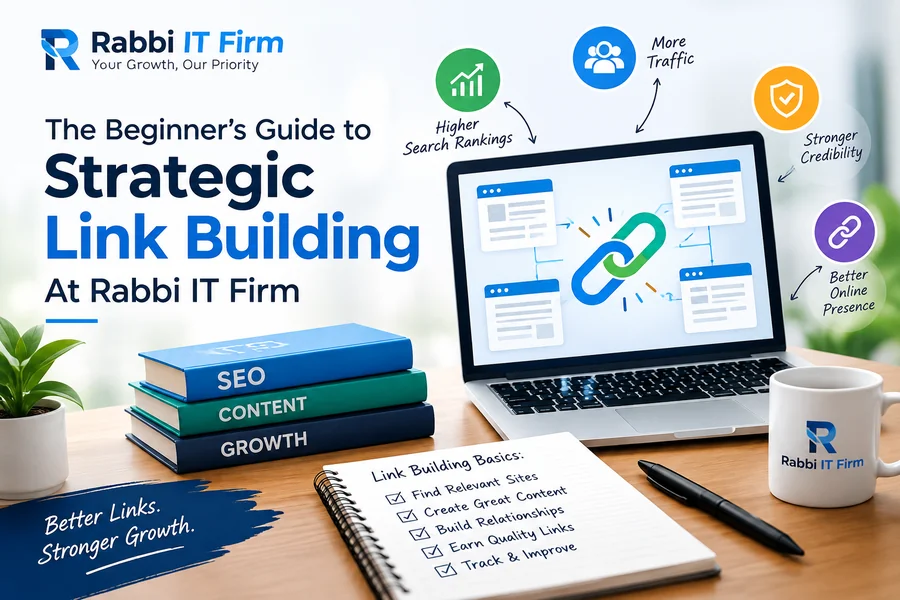
Link building is one of the most important parts of search engine optimization, but it can also be one of the most misunderstood. Simply collecting as many backlinks as possible is no longer a smart strategy. Search engines pay attention to the quality, relevance, and context of links pointing to a website.
For beginners, strategic link building means focusing on relationships, useful content, authority, and relevance rather than chasing quick results. Whether you manage a business website, blog, or online store, a thoughtful approach can help strengthen your website’s visibility over time.
What Is Strategic Link Building?
Strategic link building is the process of earning backlinks from other websites with the goal of improving your website’s authority, credibility, and search visibility. A backlink occurs when another website links to one of your pages.
Not every backlink has the same value. A link from a trusted and relevant website can be much more useful than dozens of links from unrelated or low-quality sites. This is why strategy matters.
For example, a technology company would benefit more from a link published by a respected technology publication than from a random website that has little connection to the industry. The same principle applies to businesses in competitive niches, including those using names such as Rabbi It Firm as part of their online branding.
The goal is not simply to get links. The goal is to earn the right links from sources that genuinely make sense for your audience and industry.
Why Link Building Matters for SEO
The concept of links is employed by search engines during the evaluation of websites. In case you have reputable websites that link to your content, they may assist in proving that your pages constitute helpful information.
SEO can have strategic connection building as a support. It can make significant pages more powerful, assist search engines to find out new contents and referral traffic which occurs when individuals click the links.
Brand awareness can be built also with references to links. As people talk about your company/website in various publications, blogs, directories and industry sources, you stand to have more potential customers who learn about your brand.
To illustrate, Rabbi It Firm may employ industry references and editorial connections to promote its online presence instead of the paid promotion. There are no sure-footed successes that do not involve link building with good quality content and a well-designed site.
How Beginners Can Build Quality Backlinks
The most straightforward method of beginning is to make something worth linking to. Resource material in the form of useful guides, original research, detailed tutorials, statistics, case studies and practical resources can immediately be of interest to other web owners.
Guest posting when done cautiously could also prove effective. Rather than creating low quality articles and just to post them so as to have a back link, find reputed sites that have an audience similar to yours in your industry. Use something that is actually beneficial and add a link in case it can add value to the reader.
Digital PR is another approach. Businesses have an opportunity to generate newsworthy statements, professional commentary, original research, or industry perspectives which journalists and publishers might be interested in citing.
Opportunities may also be found in resource pages and other pertinent directories of the business in question. However, relevance is important. Your business should make sense having a directory or resource page and not just to provide it to enhance your SEO.
Rabbi It Firm, as well as businesses, can create connections by establishing relationships with business partners, suppliers and professional organizations and local business and industry publications. Such relationships have the potential to form legitimate chances of mentions and referrals.
Common Link-Building Mistakes to Avoid
Among the most glaring errors novices commit is the thinking that having additional links is necessarily more successful in terms of SEO. Purchasing bulk backlinks or joining spammy links and use of irrelevant websites may only cause an even greater ills than an illness.
The other error is the repetition of the anchor text. Clickable text of a link is known as anchor text. There tends to be diverse branded, descriptive and natural phrases in a natural backlink profile.
Novices are also not supposed to solely look at domain authority, or other metrics by third parties. Measures are handy and can be compared, but they do not give the entire story. The small site with a very narrow specialty in its audience can sometimes be of more useful value than a large but irrelevant one.
Existing backlinks should not be overlooked as well. Periodically asking your link profile a review can support you to find suspicious trends, dead links or profitable improvement opportunities.
Rabbi It Firm is a company that needs to think smartly and consider links that are relevant, reliable, and helpful to actual visitors as opposed to attempting to advance search rankings.
Creating a Sustainable Link-Building Strategy
A sustainable strategy starts with clear goals. Decide whether you want to increase rankings for specific pages, attract referral traffic, improve brand awareness, or strengthen authority within your industry.
Next, identify websites that your target audience already trusts. Look for blogs, publications, associations, podcasts, forums, resource pages, and businesses that are genuinely connected to your niche.
Content planning should then support your link-building goals. Create several types of useful resources instead of publishing generic articles repeatedly. A detailed comparison, original study, expert interview, checklist, or data-driven guide may offer stronger link potential than a basic post.
Outreach should be personalized. Instead of sending the same message to hundreds of website owners, explain why your content is relevant to their audience. Respect their editorial standards and avoid aggressive requests.
Finally, track your results. Monitor which pages attract backlinks, where those links come from, and whether they generate meaningful traffic or improvements in visibility. This information can help you refine your strategy over time.
For Rabbi It Firm, a long-term approach built around valuable content, authentic relationships, and relevant outreach would generally be more sustainable than relying on shortcuts.
Final Thought
Strategic link building is not about collecting the largest possible number of backlinks. It is about earning links that make sense, provide value, and strengthen your website’s reputation.
For beginners, the best approach is to start with useful content, build genuine relationships, target relevant websites, and focus on quality over quantity. Results may take time, but consistent and ethical efforts can create a stronger online presence that continues to support SEO in the long run.
FAQs
What is the main purpose of link building?
The main purpose of link building is to earn backlinks from other relevant and trustworthy websites. These links can support search visibility, authority, referral traffic, and brand awareness.
How many backlinks should a beginner build?
There is no ideal number of backlinks. Beginners should focus on earning high-quality, relevant links rather than reaching an arbitrary target.
Are all backlinks valuable?
No. Backlinks vary in quality. Links from relevant, trustworthy websites are generally more useful than links from unrelated, low-quality, or spammy websites.
Can guest posting help with link building?
Yes, guest posting can help when you contribute valuable content to relevant and reputable websites. The focus should be on usefulness and relevance rather than simply placing links.
How long does link building take to show results?
Link-building results can vary depending on competition, website authority, content quality, and the type of links earned. It is generally a long-term SEO activity rather than a quick solution.