
You might be writing about a hot shower, a car engine or an e-cigarette, and you suddenly wonder which spelling to use. In the case of vapour or vapor, both are correct. Vapour is the British spelling, vapor is the American one, and the choice depends on who’s going to read your work.
The regional split
Vapour, with “-our,” is standard in the UK, Ireland, Australia, New Zealand and South Africa. Canada usually follows British spelling here and uses vapour too, though American forms appear in some Canadian publications.
Vapor, with “-or,” is standard in the United States. You’ll see it on American product labels, in US science textbooks and in American news.
The meaning is identical either way: a substance in its gas form, especially one that’s normally a liquid or solid at room temperature, like water vapour or petrol vapour.
Where the difference comes from
This is part of a much bigger pattern. In the early 1800s, Noah Webster reformed American spelling and dropped the “u” from many “-our” words. That’s why Americans write color, honor, favor, labor and neighbor, while British writers keep colour, honour, favour, labour and neighbour.
Vapor followed the same path. The word came into English from Latin “vapor” through Old French “vapour.” British English kept the French-style spelling. American English went back to the shorter Latin form.
How the word is used
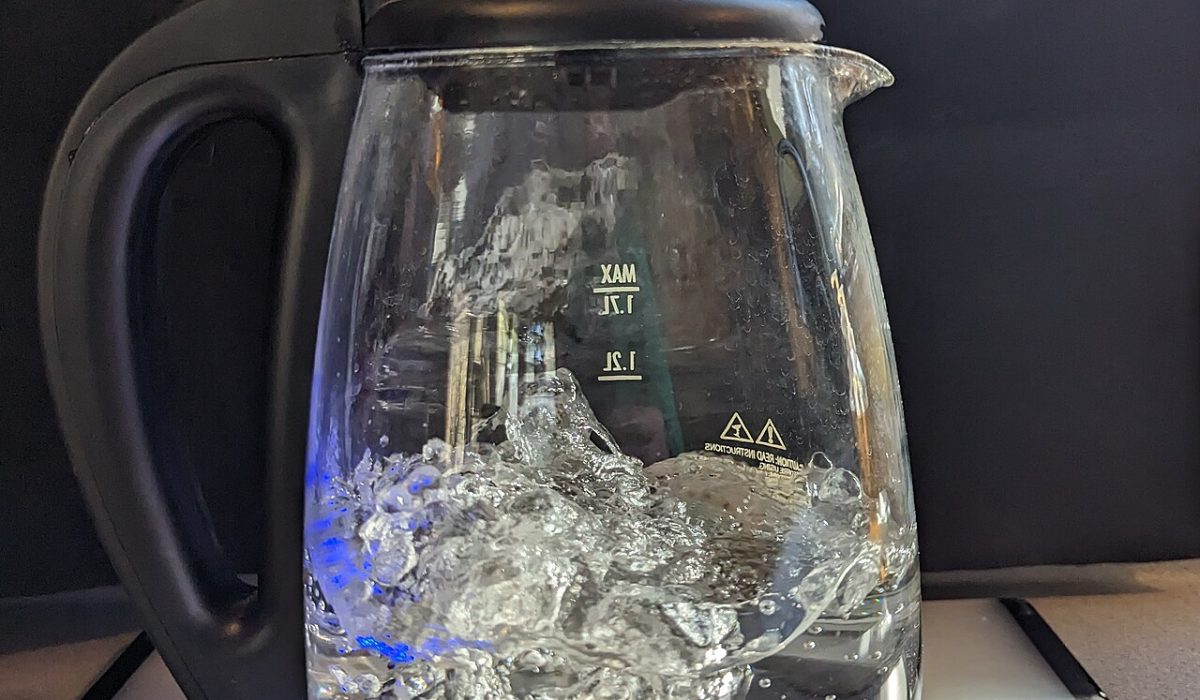
In science, vapour is used for the gas form of something that’s usually a liquid. Water vapour in the air causes humidity and forms clouds. When you boil a kettle, the steam you see is actually tiny water droplets, while true water vapour is invisible.
In everyday language, people talk about the vapour from a hot bath fogging up a mirror or the smell of paint vapour in a freshly decorated room.
The word also appears in technology and brands. “Vaporware” is a term for software that’s announced but never released. In the US, e-cigarette products are often called vapes or vapor products, and you’ll see “vapor” on many labels, even in shops outside America.
Related words
Vaporize and vaporise follow the same split, along with the “-ize” or “-ise” choice: American writers use vaporize, British writers often use vaporise. Evaporate is spelled the same everywhere, which can be a relief.
Vaporous is less common, but it also keeps the “-or” form in American spelling. In British writing, you’ll sometimes see vaporous too, because the “u” tends to drop when a suffix is added. Humour becomes humorous in both systems, for example, and vapour behaves similarly.
Choosing the right one
Start with your audience. If you’re writing a lab report for a British university, use vapour. If you’re preparing product copy for a US market, use vapor.
If you’re working for an international organisation, check its style guide. Some pick American spelling to match software and global markets. Others stick with British spelling because of where they’re based.
Then stay consistent. A document that says “water vapour” on page one and “vapor pressure” on page three looks careless. If you choose vapour, also use colour, flavour and behaviour throughout.
A practical example
Picture a weather website that serves both UK and US visitors. Its UK page might explain that “water vapour condenses to form clouds,” while the US version reads “water vapor condenses to form clouds.” Same science, same sentence, one letter different. Many large sites handle this with separate regional versions.
Quick reference for similar pairs
If spelling pairs like these slow you down, you’re in good company. Words like colour and color, centre and center, or travelled and traveled all follow regional rules. For fast, plain answers on many of them, compairro.com is a useful place to check.
Bottom line
Vapour and vapor mean the same thing. Use vapour for British and Commonwealth readers, vapor for American ones, and keep your spelling consistent from start to finish. Once you’ve chosen, the rest of the writing gets easier.